
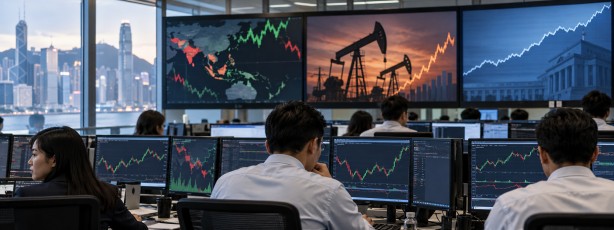
Asian markets experienced a mixed trading session on Friday as investors navigated rising oil prices, escalating government bond yields, and persistent uncertainties surrounding the Middle East conflict. These factors collectively weighed on market sentiment, influencing investment strategies across the region.
Oil prices, which had surged over 3% on Thursday, saw a slight decrease during Friday’s trading, with Brent crude dropping around 0.7%. This fluctuation in oil prices has intensified concerns about energy supply disruptions and their potential impact on inflation.
In the bond market, the US 10-year Treasury yield reached its highest level since 2007, while the 30-year yield climbed to a peak not seen since 2004. Japan’s 10-year government bond yield also hit a fresh 30-year high, drawing significant attention from investors focused on these indicators.
The stock market response varied across Asia. Japan’s Nikkei 225 rose by 1.2%, contrasting with a 1.8% decline in Hong Kong’s Hang Seng Index. Meanwhile, markets in Shanghai, Seoul, and Taipei remained closed due to holidays.
In addition to economic factors, geopolitical tensions and trade considerations played a role in shaping market dynamics. The United States and China extended their trade truce by two months, though unresolved issues such as tariffs and technology restrictions continued to influence investor sentiment.
Renewed tensions in the Middle East have further strained the oil market, heightening worries about global inflation and the broader economic outlook. As the situation evolves, investors remain cautious, closely monitoring developments that could impact future market performance.