
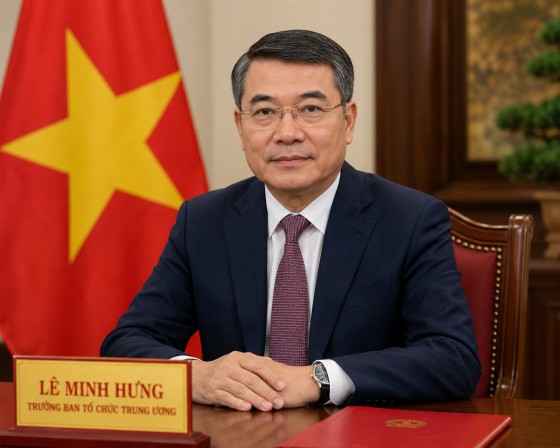
Vietnam is setting its sights on ambitious economic goals, as Prime Minister Lê Minh Hưng announced the government’s dedication to achieving double-digit growth from 2026 to 2030. Emphasizing the importance of macroeconomic stability, inflation control, and balanced development, the Prime Minister highlighted the updated strategy and policy roadmap designed to meet this target during a nationwide teleconference with local authorities.
At the June government meeting, Prime Minister Lê Minh Hưng directed ministries and local governments to adhere to key national development resolutions, expedite legislative reforms, and ensure that directives from the central government translate into actionable plans with clear accountability. Regions with slower economic growth have been instructed to reassess their development strategies, while those performing well are encouraged to surpass their existing targets.
Public investment is slated for acceleration, particularly in critical sectors like transport, energy, agriculture, worker housing, and infrastructure for the upcoming APEC 2027. Ministries and localities with poor disbursement records may face funding cuts, as project performance becomes a significant criterion for evaluating officials. The government is also focusing on innovation, science, technology, and digital transformation, planning to enhance national digital infrastructure and integrate key databases with the National Data Centre.
Vietnam’s economy showed robust performance in the first half of 2026, with GDP rising 8.39% in the second quarter, contributing to an 8.18% growth in the first half—the strongest since 2011. Manufacturing, construction, and services were the primary growth sectors, supported by a record 12.25 million international tourists. Foreign direct investment reached $34.65 billion in registered capital, with disbursed investments hitting a five-year high of $13.03 billion. Total trade exceeded $550 billion, alongside strong growth in state budget revenue and overall investment.
Despite these positive indicators, the government acknowledges challenges such as uneven regional growth, sluggish public investment disbursement, and delays in major infrastructure projects. Improvements in the business environment and administrative reforms remain necessary. The Prime Minister also emphasized the need for advancements in education, healthcare, social welfare, national defense, and public communication, while enhancing international cooperation and fulfilling global commitments.