
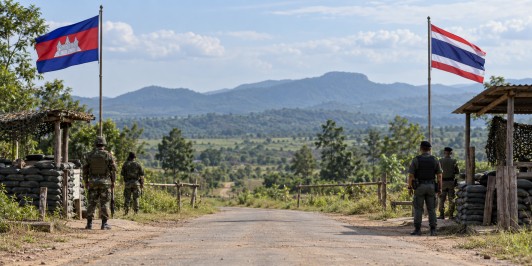
The Cambodian government has declared that its recent ceasefire agreement with Thailand will not be used to define a new international border or determine legal ownership of the contested areas between the two nations. This statement follows an agreement reached in December by both countries to keep their military positions stable and ensure the safe return of displaced civilians. The ceasefire officially began on December 27.
Cambodia’s Information Minister, Neth Pheaktra, emphasized that the ceasefire does not influence future decisions regarding the international boundary. He accused Thai forces of strengthening their positions within areas claimed by Cambodia by installing barbed wire, setting up containers, and building trenches, roads, and military facilities. According to Pheaktra, such actions could alter the status quo rather than simply maintaining existing positions.
The conflict has led to the displacement of more than 20,000 people, according to Cambodian officials, who stress that the return of these civilians should be a key indicator of the ceasefire’s effectiveness. Cambodia remains firm in its stance that the disputed territory is under its jurisdiction, despite Thailand’s activities in the region.
Meanwhile, Thailand has been actively engaging foreign delegates, ASEAN observers, and international journalists, showcasing areas near the border such as the O’Smach casino area and the Choam crossing. These visits were intended to support Thailand’s claims about the use of casino facilities and alleged cross-border criminal activity.
The tensions between Cambodia and Thailand over the disputed territories continue to simmer, with both nations maintaining their respective claims. The recent ceasefire agreement represents a temporary measure, as the two countries navigate their complex territorial disagreements.