
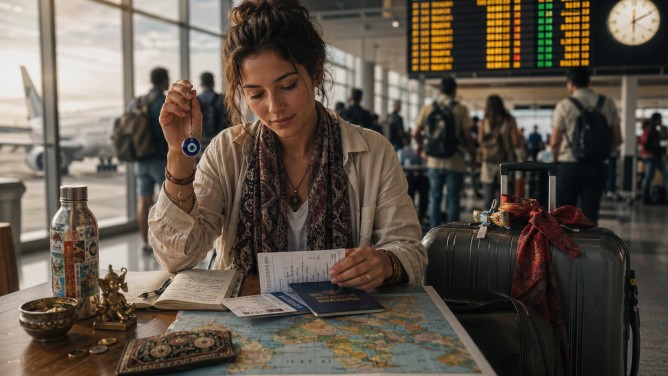
Travelers around the world often embrace unique rituals and superstitions to attract good luck and ensure a safe journey. These fascinating customs vary widely across cultures, offering an intriguing glimpse into local traditions and beliefs. While some may find these practices peculiar, they continue to be an integral part of travel culture for many.
In the Balkans, for instance, carrying a clove of garlic in luggage is believed to ward off negative energy and the evil eye, protecting travelers from misfortune. Meanwhile, a simple gesture like touching or tapping the exterior of an airplane before boarding is a common luck-enhancing ritual for anxious flyers. This touch of the plane is thought to bring good fortune and provide comfort to those with a fear of flying. Similarly, stepping onto the plane with the right foot first is considered a positive way to start a journey, symbolizing a prosperous beginning.
In several parts of the Middle East and the Balkans, families practice the custom of throwing water behind a departing traveler. This act symbolizes a smooth and safe trip, with the hope of ensuring the traveler’s safe return. Numbers also play a significant role in travel superstitions. While 13 is famously avoided in many Western countries, the number 4 is shunned in China due to its resemblance to the word for death. In Italy, 17 is traditionally considered unlucky, influencing choices like hotel room numbers and building floors.
Other customs focus on providing a moment of reflection before embarking on a journey. For instance, a Slavic tradition involves sitting on one’s packed luggage briefly before departure, allowing travelers to gather their thoughts and mentally prepare for the trip ahead. In some cultures, sweeping the floor immediately after someone leaves is avoided, as it is believed that doing so might sweep away the traveler’s good fortune or interfere with their safe return.
These travel superstitions, despite lacking scientific evidence, remain an interesting part of cultural identity and tradition. For many, they serve more as a way to preserve family customs and add a sense of excitement to the experience of starting a new journey, rather than as a test of their efficacy. Embracing these rituals allows travelers to connect with cultural heritage and feel a sense of security as they venture into the unknown.