
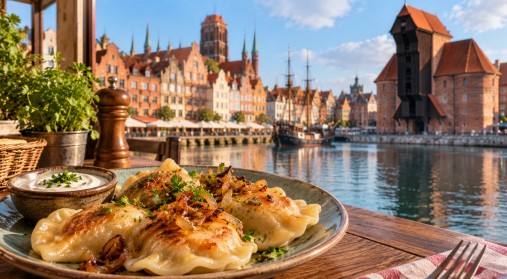
In the heart of Gdańsk, one of Poland’s most enchanting cities, lies a culinary treasure: the pierogi. This beloved comfort food is a staple of Polish cuisine, offering a delightful array of flavors and textures. Visitors to the historic streets of Gdańsk can indulge in a variety of these traditional dumplings, which feature fillings ranging from the classic potato and cheese to cabbage and mushroom, and even minced meat. Modern eateries have also embraced creativity, crafting pierogi with more adventurous combinations.
For those seeking an authentic taste of Poland, traditional pierogi are boiled and then lightly fried, providing a soft center complemented by a crispy exterior. These dumplings are typically served with simple yet rich toppings like sour cream or fried bacon, enhancing their texture and flavor. Potato-and-cheese pierogi, in particular, remain a favorite, especially when paired with savory accompaniments.
Gdańsk’s culinary scene showcases the versatility of pierogi, with menus offering options filled with meat, seafood, vegetables, and unexpected ingredients. Some restaurants specialize in this dish, preparing their dumplings by hand on-site and allowing visitors to witness the meticulous preparation process. Such establishments offer an extensive selection of boiled, baked, or fried pierogi, highlighting the dish’s adaptability and appeal.
While traditional recipes hold a special place, contemporary chefs in Gdańsk are not shy about experimenting. They have introduced innovative pierogi variations, featuring fillings like beef, cheese, vegetables, and even sweet concoctions. This blend of Polish tradition with modern culinary creativity makes Gdańsk a fascinating destination for food enthusiasts eager to explore diverse flavors.
For those venturing through the city, sampling a variety of pierogi—rather than opting for a single large serving—can be a rewarding way to experience different tastes and cooking methods. Gdańsk exemplifies how pierogi are more than just a national dish; they are a significant part of Poland’s evolving culinary culture, deeply rooted in tradition yet open to new interpretations.