
Việt Nam is setting its sights on global economic integration, as recent Politburo resolutions outline ambitious goals for the country’s enterprise landscape. Resolution No. 68-NQ/TW, issued in May of the previous year, targets the establishment of 2 million active enterprises by 2030, including at least 20 major corporations within global value chains. Further, Resolution No. 79-NQ/TW, introduced in January of this year, aims to position 50 state-owned enterprises among Southeast Asia’s top 500 companies, with one to three listed among the world’s top 500 by the same year.
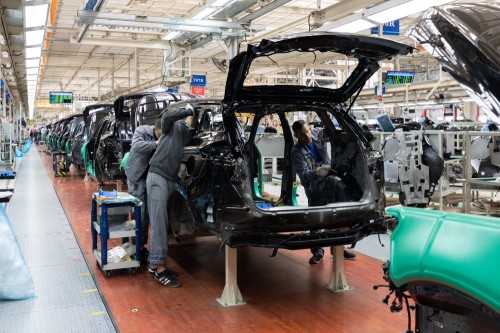
These resolutions emphasize the development of robust state-owned economic groups with significant regional and international competitiveness. The country has already seen substantial growth in various sectors over the past decades, highlighted by Đậu Anh Tuấn, deputy secretary-general of the Vietnam Chamber of Commerce and Industry. Noteworthy examples include THACO’s expansive automobile production ecosystem in Quảng Nam, VinFast’s strides in the electric vehicle industry with its global market reach, and Hòa Phát Group’s rise as a leading steel manufacturer in Southeast Asia.
The tech and consumer sectors also showcase significant progress, with FPT emerging as a major player in information technology across multiple countries, and Vinamilk and Masan Group expanding their consumer goods influence globally. Meanwhile, the real estate and infrastructure sectors, spearheaded by Vingroup and Sun Group, have undertaken projects of unprecedented scale within the private sector, reshaping urban landscapes and tourism infrastructure.
Despite these advancements, Việt Nam faces challenges in transforming its enterprises into global competitors. Đậu Anh Tuấn highlights that while the business sector is vast, it lacks depth and capacity. Economic experts like Nguyễn Đức Hiển and Trần Đình Thiên emphasize the need for a shift from broad-based support to targeted assistance for businesses capable of leading and transforming entire production chains. Such a strategic focus is crucial for Việt Nam to mature into an economic powerhouse with corporations that can withstand global economic fluctuations.
The path forward involves meticulous selection of priority industries and strategic long-term investment, as demonstrated by countries like Japan, South Korea, and China. By leveraging its own policies and market scale, Việt Nam hopes to foster economic groups of regional and global significance. The groundwork has been laid, and if implemented effectively, the coming decade could witness Việt Nam’s significant ascent in global industrial value chains, fulfilling its aspirations for substantial economic growth on the international stage.