
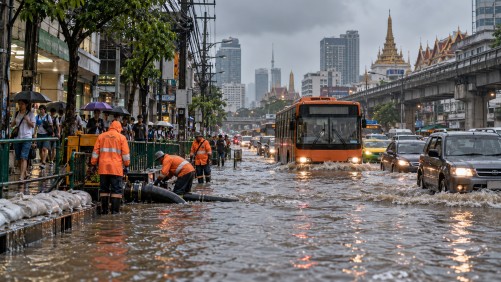
Severe flooding in Bangkok has raised serious concerns about the Thai government’s disaster response capabilities, as residents and experts scrutinize preparedness measures, warning systems, and the management of increasingly heavy rainfall. The flooding, which began with heavy rains on September 24, has submerged roads, homes, and vehicles across several parts of the capital, including Lat Krabang and Bang Kapi districts.
The situation has prompted authorities to declare all 50 districts of Bangkok as disaster-affected areas. Emergency shelters have been established, and personnel along with equipment have been deployed to assist the affected communities. However, the timing of emergency warnings has come under fire, with critics questioning whether residents were given adequate time to move their belongings and vehicles to safety before floodwaters rose.
In response to the crisis, the Thai government has mobilized military personnel and emergency vehicles, with transport authorities coordinating assistance across various modes of transportation, including road, rail, water, and air services. Efforts to drain and pump water from affected areas have been ongoing as authorities strive to reduce water levels.
The flooding comes at a politically sensitive time for Prime Minister Anutin Charnvirakul and the Bhumjaithai Party. A recent NIDA Poll, conducted from September 18 to 23, indicates a decline in political support, with only 13.76% of respondents naming Anutin as their preferred prime minister, down from 21.68% in the previous quarter. The Bhumjaithai Party’s support has also decreased to 12.08% from 17% in the previous quarter. It’s important to note that this survey was conducted before the most severe flooding began, meaning it does not account for public opinion regarding the government’s flood response.
While the immediate focus remains on relief operations, drainage efforts, and public warnings, the effectiveness of the government’s response could have lasting implications on public perception and political support, as future polling may reveal shifts in opinion related to the handling of this natural disaster.